Application security risk management for organizations that build their own software
- One view of every app, from code to production
- Vulnerabilities ranked by business impact, not volume
- Every decision recorded for audits and regulatory reviews
- Deployed on-premise, so your data stays inside your organization
What is application security risk management (ASRM)?
Application protection risk management, often shortened to ASRM or simply app risk management (ARM), is the process of identifying, assessing and treating the security risks in the software your organization builds and runs. It looks beyond a list of security weaknesses and asks a company question: which weaknesses could actually hurt us, how likely are they to be exploited, and what would the effect be on our data, customers and operations?
A mature ASRM program connects three things that usually live apart. Security testing tells you where the vulnerabilities are. Company context tells you which applications and assets matter most. Governance tells you who decides, how fast risks must be fixed and how every decision is recorded. When those three come together, teams spend their time on the threats that matter, leadership gets a clear view of the organization’s exposure, and compliance becomes a by-product of good practices rather than a yearly scramble. That approach helps you protect critical assets while ensuring the cost of security stays proportional to the company value at stake.
An inventory of applications with their business criticality
Vulnerabilities from code, open source and running web apps in one place
Assessment based on likelihood and company effect
Clear owners, deadlines and accepted risks
Evidence for regulatory and compliance requirements
10
risk categories in the OWASP Top 10, the most widely used reference for web application security risks.
10
risk categories in the OWASP Top 10, the most widely used reference for web application security risks.
Why application protection risk management is hard to get right
Most organizations already invest in app security tools. SAST scans the code, software composition analysis checks accessible source libraries and DAST tests web applications before release. The problem is what happens next. Each tool produces its own findings with its own severity score, and nobody turns them into a single, company-based view.
Without that view, security teams chase the longest list instead of the biggest threat. Crucial applications get the same treatment as internal prototypes, accepted risks are never written down, and when the board or a regulator asks how application risk is being managed, the answer takes weeks to assemble. The cost is real: time lost on low-impact issues, while potential attacks on high-value assets go unaddressed.
The application security risk management process, step by step
Phase 01
Step 1: identify applications, assets and threats
You can’t manage risks you can’t see. The first step is an inventory of applications, the company processes they support and the data they handle, together with the threats each one faces and the attack paths an attacker could use.
- Inventory of applications with owners and company criticality
- Classification of the data each app processes
- Threat modeling for critical and internet-facing web applications
- Security requirements derived from regulatory obligations
- Code repositories and open source components mapped to each application
Prevents blind spots that leave critical applications outside the program.
Phase 02
Step 2: assess protection weaknesses and risk
Risk assessment combines what security evaluation finds with what the business knows. A vulnerability in a payment application exposed to the internet has a very different potential effect from the same issue in an internal tool, even if the scanner gives both the same score.
- Findings from SAST, SCA and DAST consolidated per app
- Duplicates removed so each software flaw is assessed once
- Likelihood and potential effect considered for each finding
- Severity combined with application criticality and exposure
- A clear view per application, team and company unit
Prevents teams from spending time on noise while crucial risks wait.
Phase 03
Step 3: treat each risk
Every significant risk needs a decision: fix it, reduce it with a compensating control, or formally accept it. What matters is that the decision is explicit, owned and time-bound.
- Remediation assigned to the team that owns the code
- Deadlines based on severity and company impact
- Formal acceptance with a reason and an expiry date
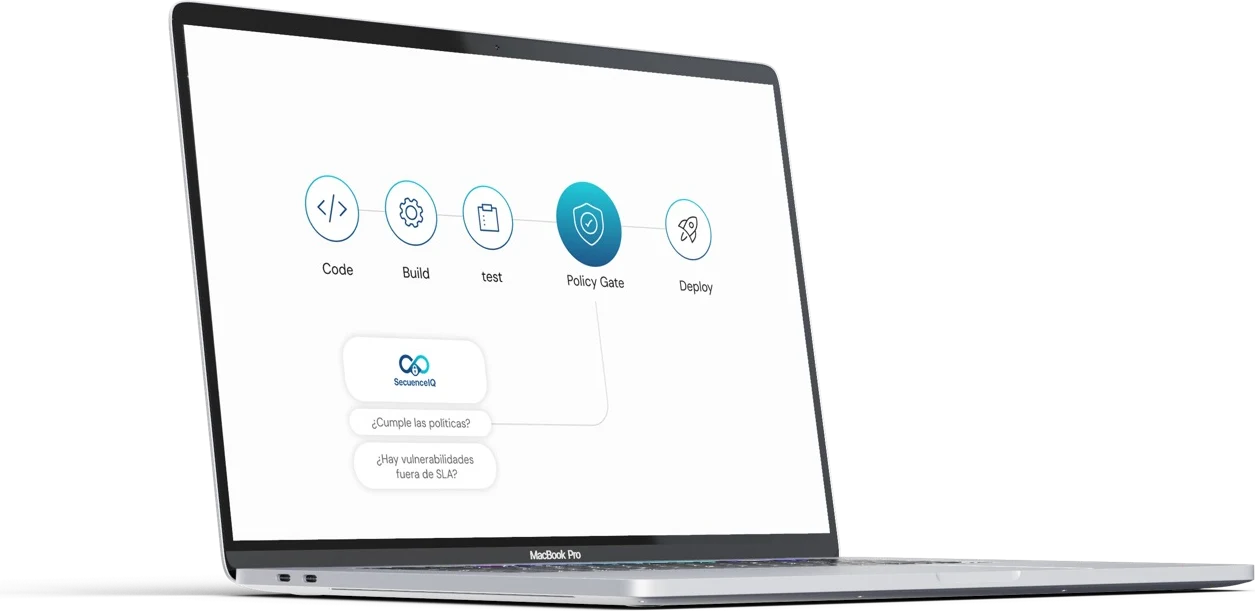
- Quality gates that stop high-risk releases
- Escalation when critical risks stay accessible too long
Prevents risks from staying open with nobody accountable for them.
Phase 04
Step 4: monitor, report and improve
App risk changes with every release. Continuous monitoring keeps that view current, helps ensure nothing is forgotten and gives leadership the evidence it needs to make decisions and prove compliance.
- Continuous testing of code, dependencies and web applications
- Trends in accessible risks and time to remediate
- Reports for the board, auditors and regulators
- Compliance mapped to ISO 27001, NIS2, the CRA, PCI DSS and GDPR
- Lessons fed back into development practices
Prevents a program that looks good on paper but drifts in practice.
Where application security risks come from
Code
Static application security testing (SAST) finds weaknesses such as injection flaws or missing input validation in the code your developers write, and supports secure coding practices before the software ships.
Open source
Most applications are built largely from accessible source components. Software composition analysis flags known vulnerabilities in them and helps you protect the software supply chain.
Web applications
Dynamic evaluation (DAST) simulates an attack on a running web app from the outside, the way an attacker would, to reveal risks that only appear at runtime.
Design
Some risks are designed in. Threat modeling and clear security requirements help teams build secure applications and avoid weaknesses that no scanner can find later.
Frameworks that support an application security risk management program
OWASP SAMM
An open maturity model to assess your current application protection practices and plan improvements, step by step, based on your own threat profile.
- Baseline assessment of current practices
- A measurable roadmap for the program
NIST SSDF
A set of secure development practices that helps organizations reduce vulnerabilities in the software they build and respond to them when they appear.
- Four practice groups across the lifecycle
- A common language for development and security
Regulatory requirements
ISO 27001, NIS2, PCI DSS, GDPR, Spain’s ENS and the EU Cyber Resilience Act all expect organizations to manage software vulnerabilities and prove it with evidence.
- Compliance evidence from one source
- CRA vulnerability reporting since 11 September 2026
App security risk management best practices
Six practices that help organizations focus their security effort where the potential company impact is highest.
24 h
For products within the CRA’s scope, manufacturers must submit an early warning of an actively exploited vulnerability without undue delay and within 24 hours of becoming aware of it.
72 h
Unless the relevant information has already been provided, manufacturers must submit the vulnerability notification without undue delay and within 72 hours of becoming aware of the actively exploited vulnerability. Knowing which applications use the affected component is what makes these deadlines realistic.
“The goal is not zero security weaknesses. It is knowing which risks you carry, and choosing them on purpose.”
Application security risk management principle
- Start with business effect
Rank applications by the data they handle and the company processes they support before you rank a single vulnerability.
- Test continuously
Run SAST, SCA and DAST automatically as part of development, so new risks are found when the cost to fix them is lowest.
- Use one common scale
Translate every tool’s score into a common, business-based approach, so protection and leadership speak the same language.
- Make risk acceptance explicit
Every accepted exception should have an owner, a reason and an expiry date, not a forgotten message in a chat thread.
- Protect crucial releases
Use quality gates to stop high-risk changes from reaching production on the applications that matter most.
- Report what changed
Show leadership how exposure evolves over time, not just how many vulnerabilities were found this month.
Your tools find vulnerabilities. Who manages the risk?
SecuenceIQ doesn’t replace your SAST, SCA or DAST tools. It brings their findings together, adds company context and turns them into one application security risk management process your teams, your leadership and your auditors can rely on.
Why organizations choose SecuenceIQ for app security risk management
WHAT IT DOES
Application security posture and risk management
HOW IT’S DEPLOYED
On-premise, inside your organization
WHO IT HELPS
CISOs, risk, AppSec and development teams
YOUR DATA
Stays within your perimeter
We help organizations turn security findings from many solutions into one clear view of their applications, where every critical issue has an owner, a deadline and a recorded decision.
SecuenceIQ is not another scanner. It orchestrates the protection testing tools you already use, consolidates their results per application and applies the same rules, policies and quality gates to every team, ensuring consistent decisions. The result is a program that scales with the number of applications instead of the number of people.
Because the platform is deployed on-premise, your code, findings and data stay inside your infrastructure. Our AppSec specialists help you define the policies, deadlines and risk criteria that fit your company, so the program starts delivering value from the first weeks.
How SecuenceIQ supports your app risk management program
A governance layer on top of your security testing tools that helps turn findings into managed exposure, from the code repository to the board report.
01 / 04
Application inventory and company context
Each application is registered with its owner, technology, environments and business criticality. That context is what lets SecuenceIQ assess vulnerabilities by real effect instead of severity alone.
02 / 04
Automated security testing
Sensors can run configured SAST and SCA analyses against project code and dependencies, and DAST analyses against configured running application targets. Results are sent back to the platform. No manual exports, no spreadsheets.
03 / 04
Consolidated view and triage
Findings are normalized, deduplicated and correlated per app. AppSec confirms each one, marks false positives or records an accepted risk with its reason, so every decision is traceable.
04 / 04
Treatment, gates and reporting
Confirmed risks become tickets in Jira, ServiceNow or Trello with deadlines based on severity. Quality gates check the policy before each release, and KPIs and compliance reports stay up to date.
Application security risk management in practice
Three everyday situations, handled from assessment to a recorded decision.
AppSec
Risk assessment
Critical software flaw in a payment application
- Fixed first, because the company effect is highest
Accessible source
SCA
New vulnerability in a shared library
- Every affected app has an owner and a plan
Governance
Risk acceptance
An issue that can’t be fixed yet
- An accepted risk that is visible, owned and reviewed
Integrations for your application security risk management program
- Repositories: GitLab, GitHub, Gitea, Azure DevOps Repos, Bitbucket and Subversion
- SAST: Fortify SCA, SonarQube, GitHub CodeQL and Veracode SAST
- SCA and SBOM: Dependency-Track, Snyk, Trivy, Syft, OSV-Scanner and CycloneDX
- DAST for web applications: OWASP ZAP
- Ticketing: Jira, Trello and ServiceNow
- Identity: Microsoft Entra ID, LDAP and local accounts
What each team gets from app protection risk management
CISO & leadership
A business view of application risk
See which applications carry the most exposure, how it evolves over time and which risks have been accepted, with reports ready for the board and regulators.
- Exposure by application, team and company unit
- Evidence mapped to ISO 27001, NIS2, the CRA and ENS
AppSec & risk
One process, one set of rules
Findings from every tool consolidated per app, with traceable triage, formal exceptions and deadlines based on company impact.
- Exceptions with an owner and a recorded reason
- Policies by application criticality
Development teams
Clear priorities, less noise
Developers receive only the security weaknesses that matter, as tickets in the tools they already use, with enough context to fix them quickly.
- Tickets in Jira, ServiceNow or Trello
- Warn mode before blocking releases
How to build an application security risk management program
The best ASRM programs grow step by step. Start with visibility, add business context, then introduce rules and gates once teams trust the data. Each step reduces exposure on its own and builds support for the next one.
01
Assess
Inventory applications, their owners and the data they handle, and measure your starting maturity with a framework such as OWASP SAMM.
02
Connect
Bring findings from your existing security evaluation tools into one place, consolidated per app.
03
Govern
Agree criteria, deadlines and the rules for accepting exceptions, and apply them in warn mode first.
04
Improve
Enforce quality gates on critical applications and report how the organization’s exposure evolves over time.
Application security risk management FAQs
Still have questions?
Tell us how your organization manages application risk today and we’ll show you where SecuenceIQ fits.
What is app protection risk management?
Application security risk management (ASRM) is the ongoing process of identifying, assessing, treating and monitoring security risks in your applications. It combines security testing results with company context so that organizations focus on the vulnerabilities with the greatest potential effect.
What is the difference between ASRM and exploitable flaw management?
Software flaw management focuses on finding and fixing individual weaknesses. ASRM, sometimes called ARM, adds the company layer: which applications matter most, which risks are acceptable, who decides and how those decisions are recorded for compliance.
How do you assess application security risk?
The usual approach combines likelihood and effect. Likelihood depends on the vulnerability, how easy it is to exploit and whether the app is exposed to attacks from the internet. Impact depends on the data and company processes the application supports. Together they give a level that is far more useful than a raw severity score, and a consistent approach across every application.
What are the most common threats to web applications?
The usual threats include injection attacks, broken access control, vulnerable accessible source components and insecure configuration, all covered by the OWASP Top 10. A good risk assessment looks at which of these threats apply to each app, which assets and data they could reach and which security requirements are already in place to stop them. That assessment is what lets you ensure effort goes to the applications attackers are most likely to target.
Does SecuenceIQ replace my protection testing solutions?
No. SecuenceIQ integrates with tools such as Fortify, SonarQube, Veracode, Snyk, Dependency-Track and OWASP ZAP, runs their analysis and consolidates the results into one view. Licences for those tools stay with your organization.
Can SecuenceIQ record accepted risks?
Yes. Each finding can be confirmed, marked as a false positive or recorded as an exception, with the reason and the person who decided, so accepted risks remain visible and traceable.
Does it help with regulatory compliance?
Yes. Findings and controls can be mapped to ISO 27001, NIS2, the CRA, PCI DSS, GDPR, ENS and the OWASP Top 10 to produce audit evidence. SecuenceIQ supports compliance but does not replace certification.
Is SecuenceIQ a cloud service?
No. It is deployed on-premise, inside your own infrastructure, so your code and data stay in your environment unless you choose to connect an external service.
How long does it take to get value?
You get a consolidated view as soon as your first repositories and evaluation solutions are connected. A scoped proof of concept on your own applications is the best way to measure it.
See your application security risk in one place
In a demo, we show how SecuenceIQ brings findings from your security testing tools together, assesses them in business context and turns them into a risk management process your teams can act on and your leadership can trust.